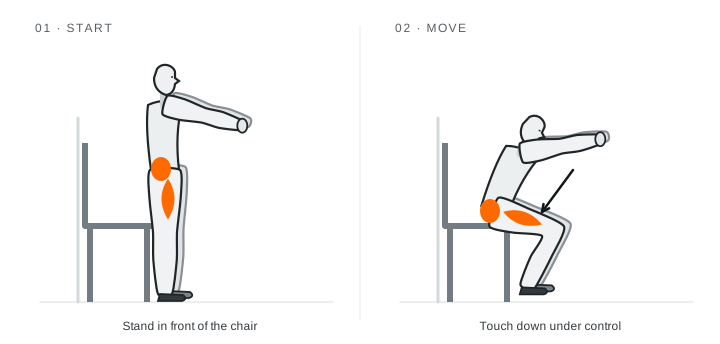
Stand just in front of the chair, feet comfortably apart. Send hips back and bend knees toward your toes. Touch down under control, then push through your whole foot to stand. Use your hands for support if needed.
Avoid: Dropping onto the seat; knees collapsing inward; using an unstable chair.
Start easier: Use a higher stable seat and hand support.
Progress: Reduce hand assistance, then progress to a goblet squat.
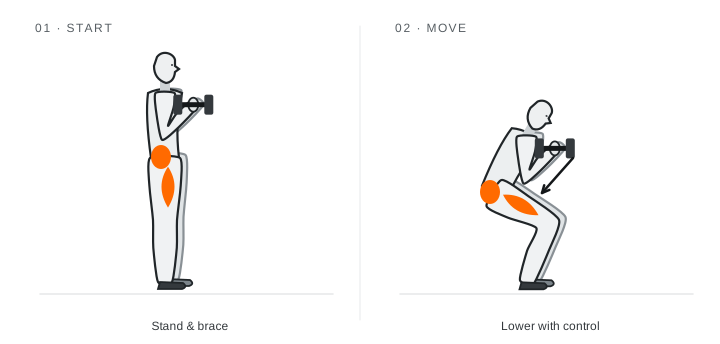
Hold the weight close to your chest. Brace gently, sit down between your hips and let knees follow toes. Use a comfortable controlled depth. Stand without tipping forward.
Avoid: Lifting heels; collapsing knees; chasing depth that changes your back position.
Start easier: Chair squat or light bodyweight squat.
Progress: Add repetitions, then a small amount of load.
Set the bar on the upper back, not the neck. Brace before each repetition. Bend hips and knees together, keeping the bar over your midfoot. Squat to a controlled comfortable depth, then stand. Set safety arms and practice unloading before loading heavily.
Avoid: Uncontrolled descent; losing foot contact; squatting without correctly set safeties.
Start easier: Goblet squat or leg press.
Progress: Small load increases after all work sets meet the target with reserve.
Set the seat so hips and back stay supported. Place feet securely on the platform. Lower only as far as your pelvis remains against the pad. Press smoothly, keeping knees soft at the top and following the machine instructions.
Avoid: Pelvis rolling off the pad; forcefully locking knees; lowering beyond control.
Start easier: Chair squat.
Progress: Add repetitions before increasing the machine load.
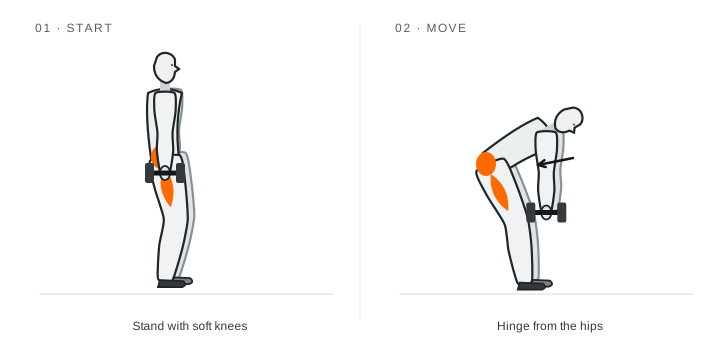
Stand tall with soft knees and weights near your thighs. Brace, move hips back and keep weights close to your legs. Stop when you feel hamstring tension without rounding your back. Drive hips forward to stand without leaning backward.
Avoid: Reaching toward the floor; rounding the back; turning the hinge into a deep squat.
Start easier: Unloaded hip hinge to a wall or glute bridge.
Progress: Add repetitions, then small load increases; a barbell is an option with coaching.
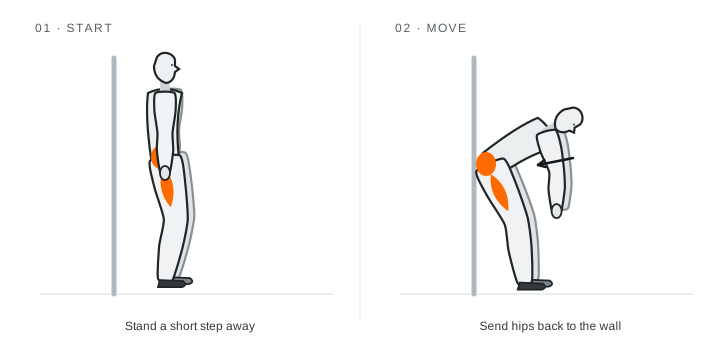
Stand a short step away from a wall with your back toward it. Soften knees, brace and send hips backward to touch the wall. Keep your trunk long. Return to standing. Move closer if you cannot reach without rounding.
Avoid: Bending mostly at the knees; reaching with the shoulders; forcing the range.
Start easier: Shorten the distance to the wall.
Progress: Use the same pattern for a light Romanian deadlift.
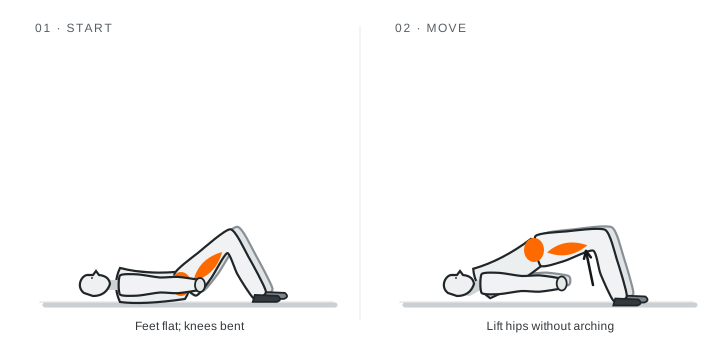
Lie on your back with knees bent and feet flat. Gently brace and squeeze glutes to lift hips. Stop before your low back arches. Lower slowly. Keep your neck relaxed.
Avoid: Arching the low back; pushing through toes; holding the breath.
Start easier: Use a smaller comfortable lift.
Progress: Add a brief pause, then a light padded weight across the hips.
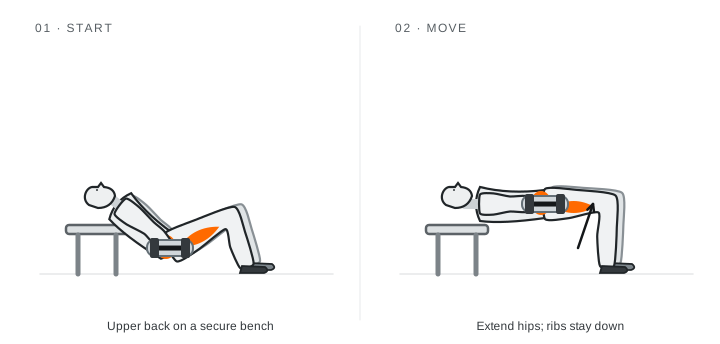
Support the upper back on a stable bench. Keep the load padded and secure over the hips. Brace and lift until hips are extended without arching the lower back. Lower with control. Use a glute bridge if the setup is not secure.
Avoid: Sliding bench; unpadded load; finishing by arching the back.
Start easier: Floor glute bridge.
Progress: Add repetitions, then load while keeping the setup stable.
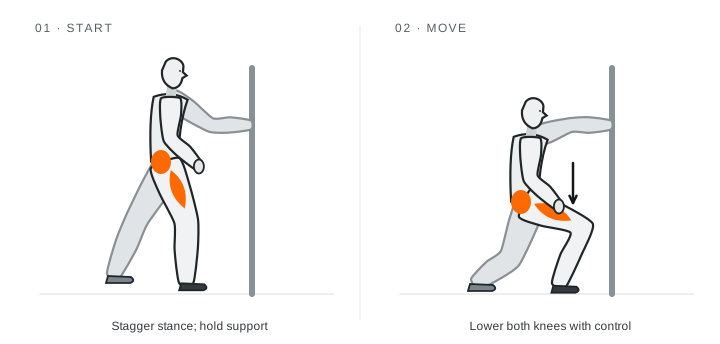
Hold a fixed support with a staggered stance. Bend both knees and lower straight down through a comfortable range. Keep the front foot planted. Push through the front foot to rise. Complete both sides.
Avoid: Very narrow stance; bouncing; taking a step so long that balance is lost.
Start easier: Use a shorter range with more hand support or a chair squat.
Progress: Increase range, then add a light weight.
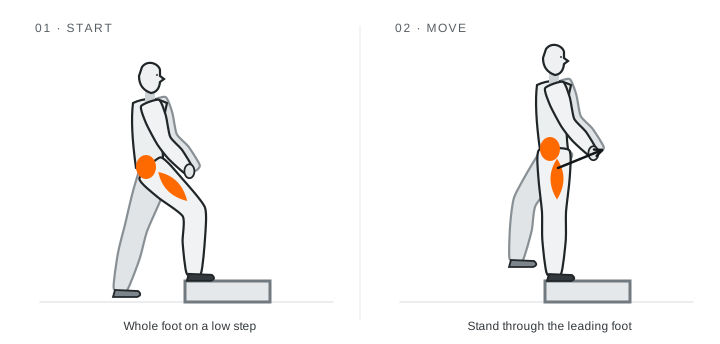
Place your whole foot on a low stable step. Use a rail if needed. Push through the leading foot to stand on the step, then lower slowly. Complete both sides. Choose a height that keeps you in control.
Avoid: Pushing hard off the trailing foot; dropping down; using an unstable platform.
Start easier: Lower step or supported chair squat.
Progress: Increase control and repetitions before height or load.
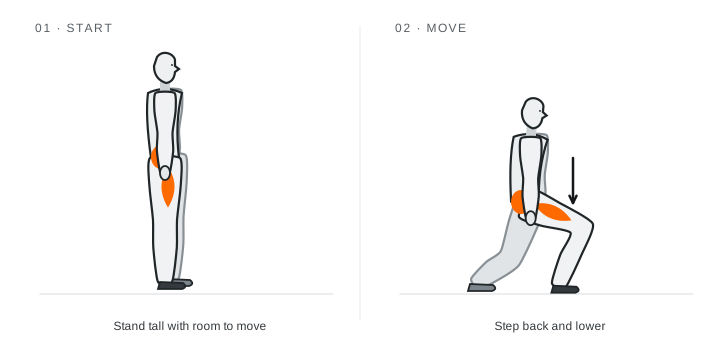
Stand tall, step one foot back and lower both knees through a comfortable range. Keep the front foot planted. Push through the front foot to return. Alternate sides or finish one side first.
Avoid: Stepping onto a tightrope; collapsing the front knee; rushing the return.
Start easier: Supported split squat.
Progress: Add light dumbbells after balance and depth are consistent.
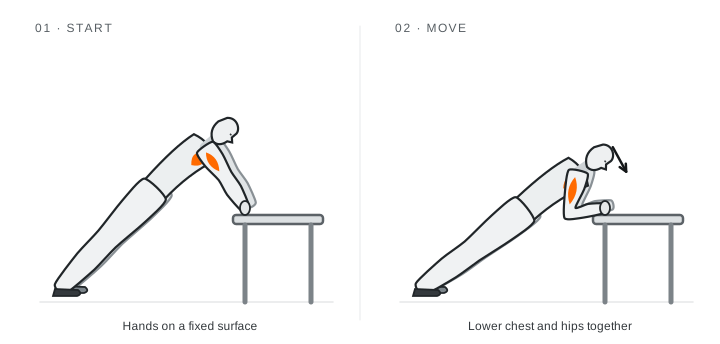
Place hands on a fixed surface, slightly wider than shoulders. Step back and keep a straight line from head to heels. Bend elbows at a comfortable angle to lower your chest. Push away without sagging through the hips.
Avoid: Using a movable surface; sagging hips; flaring elbows sharply outward.
Start easier: Use a higher fixed surface such as a wall.
Progress: Use a lower stable surface, then a floor push-up.
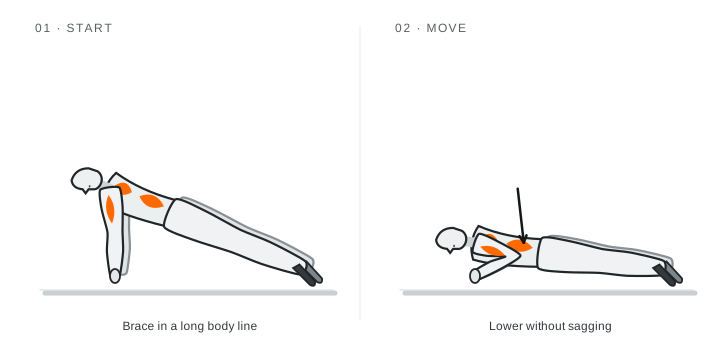
Set hands just wider than shoulders and brace your trunk. Lower chest and hips together with elbows angled comfortably back. Press the floor away while keeping your body in one line.
Avoid: Hips reaching the floor first; jutting the chin; cutting the range to gain reps.
Start easier: Incline push-up.
Progress: Add controlled repetitions, then a pause before adding resistance.
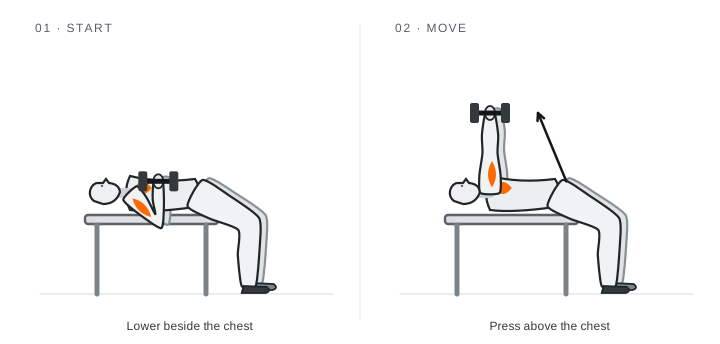
Lie with head, upper back and hips supported, feet secure. Start weights over the chest. Lower with wrists stacked over elbows through a comfortable range. Press up without bouncing or colliding the weights. Use loads you can set down safely.
Avoid: Excessively flared elbows; bent wrists; losing stable foot contact.
Start easier: Dumbbell floor press or incline push-up.
Progress: Add repetitions, then the smallest available load increase.
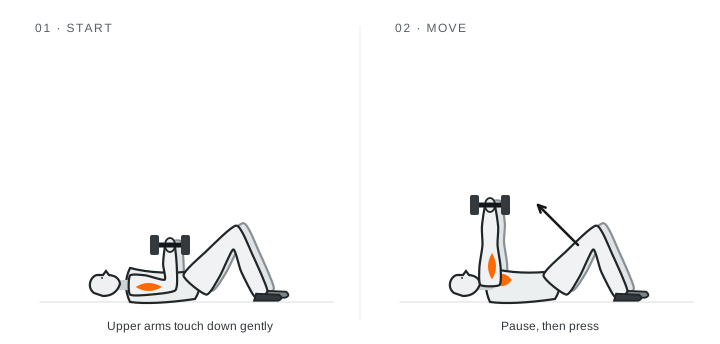
Lie on the floor, knees bent. Start dumbbells over your chest. Lower until upper arms touch the floor gently, keeping wrists over elbows. Pause and press up. Set weights down carefully.
Avoid: Bouncing elbows off the floor; sharply flared elbows; using a load too heavy to position.
Start easier: Incline push-up.
Progress: Add repetitions or progress to a stable bench.
Set a stable upper back and feet, with eyes under the bar. Use a full grip. Unrack over the chest, lower under control and press back up. Set safeties appropriately or use a competent spotter. Keep the bar off your neck.
Avoid: Bouncing the bar; unprotected heavy attempts; losing grip or body position.
Start easier: Dumbbell bench or floor press.
Progress: Small load increases after all prescribed reps are controlled.
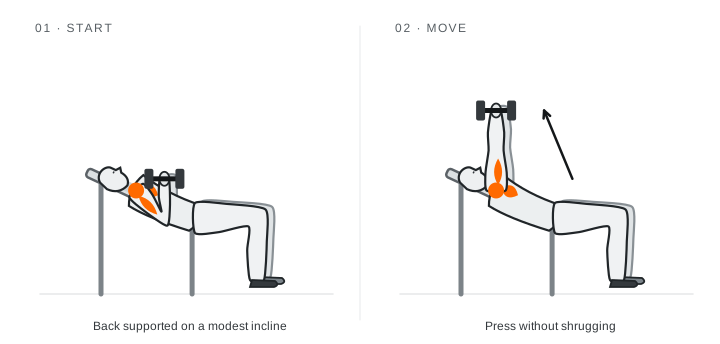
Set a modest bench incline. Plant your feet and keep your back supported. Lower weights beside the upper chest with forearms near vertical. Press up smoothly without shrugging.
Avoid: Bench almost upright; bouncing; pushing head forward.
Start easier: Dumbbell floor press or incline push-up.
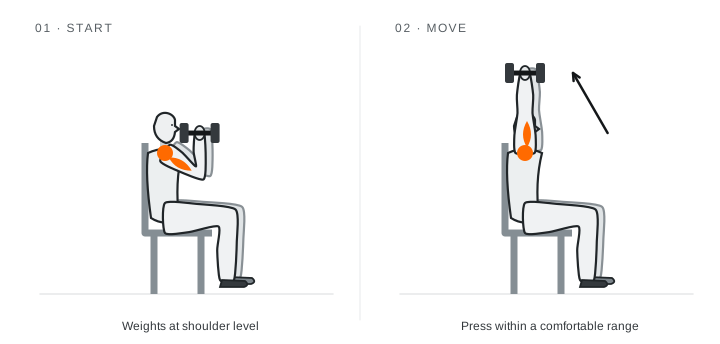
Sit tall with back support. Start dumbbells at a comfortable shoulder level, palms angled as comfortable. Press overhead only through a pain-free range without arching the back. Lower slowly.
Avoid: Arching the low back; forcing a painful overhead position; shrugging aggressively.
Start easier: Light neutral-grip press through a smaller pain-free range, or incline push-up if overhead work is uncomfortable.
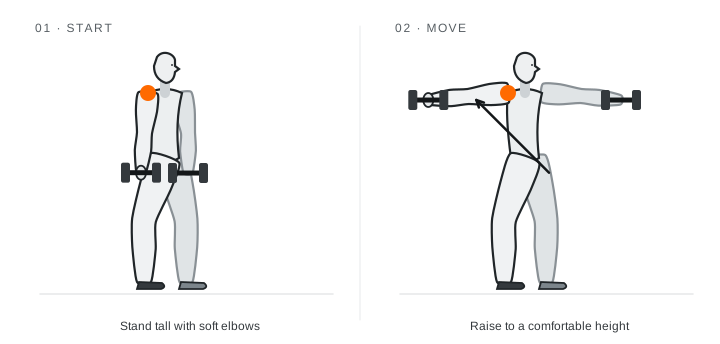
Stand tall with soft elbows. Raise arms slightly forward of your sides to a comfortable height around shoulder level. Lower with control. Use a load that does not require swinging.
Avoid: Swinging the trunk; shrugging; lifting above a comfortable range.
Start easier: Use lighter weights or a smaller range.
Progress: Add repetitions before a small weight increase.
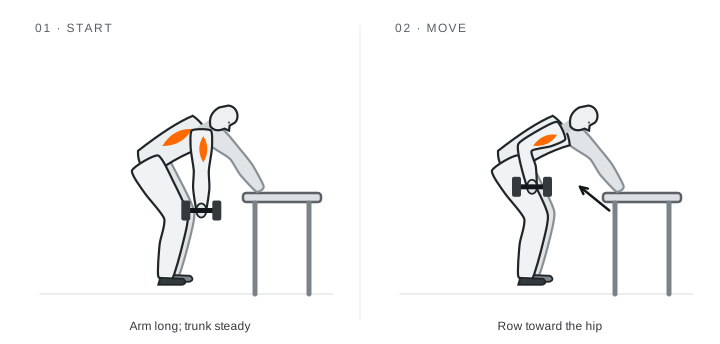
Support one hand on a fixed bench and hinge with a long back. Row the weight toward your hip without twisting. Lower until the arm is long and controlled. Repeat both sides.
Avoid: Rotating the trunk to lift; jerking; shrugging the weight.
Start easier: Light chest-supported row or seated band row.
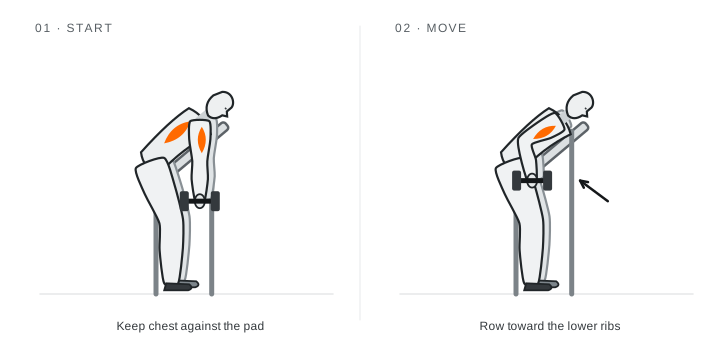
Lie chest-down on a stable incline bench with feet planted. Row toward the lower ribs, then lower smoothly. Keep the chest on the pad and neck relaxed.
Avoid: Lifting chest away from the bench; jerking; craning the neck.
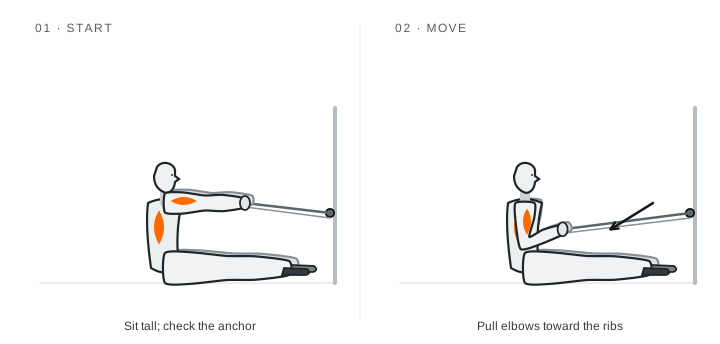
Check the band and anchor according to manufacturer instructions. Sit tall with the band in front of you. Pull elbows back toward your ribs, then return slowly. Keep your shoulders relaxed and trunk still.
Avoid: Unsecured anchor; damaged band; leaning back to create momentum.
Start easier: Use a lighter band or shorter range.
Progress: Use a stronger band only after controlled repetitions.
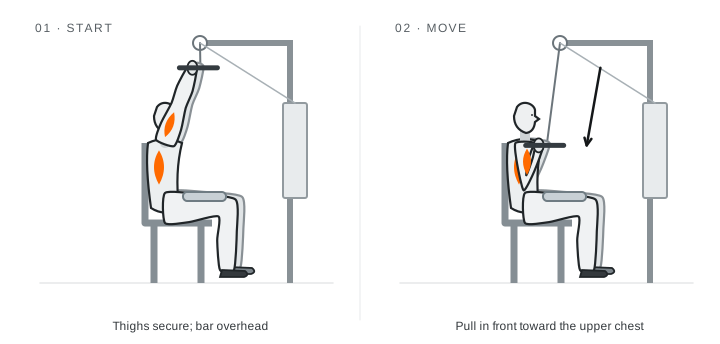
Secure thighs under the pad. Grip the bar comfortably, lean back slightly and draw elbows toward your sides as the bar approaches the upper chest. Return under control. Keep the bar in front of the head.
Avoid: Pulling behind the neck; swinging; turning the movement into a large backward lean.
Start easier: Light pulldown or supported row.
Progress: Increase repetitions, then the smallest machine increment.
Use the machine's platform and instructions for secure setup. Begin with arms long in a comfortable shoulder position. Pull elbows toward your ribs until your chin approaches handle level. Lower with control. Use enough assistance to avoid swinging.
Avoid: Kipping; jumping off the platform; choosing too little assistance.
Start easier: Lat pulldown.
Progress: Reduce assistance gradually after meeting the rep target.
Adjust the machine so your knee aligns with its pivot and the pad sits above the heel. Keep your back supported. Bend knees smoothly, pause briefly, then return slowly.
Avoid: Poor knee alignment; lifting hips; snapping the weight stack.
Start easier: Light glute bridge or lighter machine load.
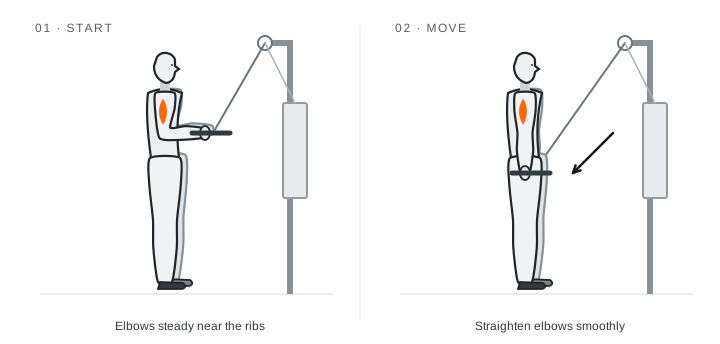
Stand balanced with elbows near your sides. Straighten elbows to move the attachment down without moving the upper arms. Return slowly and keep shoulders relaxed.
Avoid: Leaning bodyweight onto the handle; flaring elbows; snapping into lockout.
Start easier: Light cable resistance or incline push-up.
Progress: Add repetitions before the next cable increment.
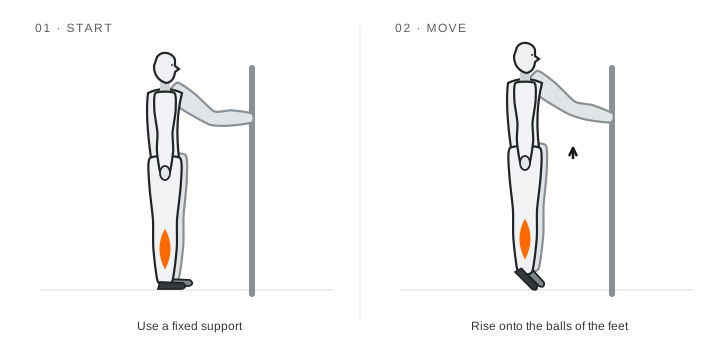
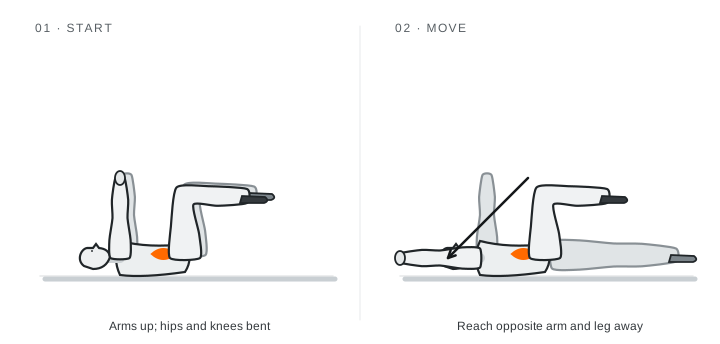
Lie on your back, hips and knees bent. Gently brace and exhale as you reach one heel away and the opposite arm overhead. Keep a comfortable, steady low-back position. Return and alternate sides.
Avoid: Arching as limbs reach; holding the breath; moving farther than you control.
Start easier: Slide one heel along the floor with arms still.
Progress: Lengthen the reach gradually while keeping trunk position.
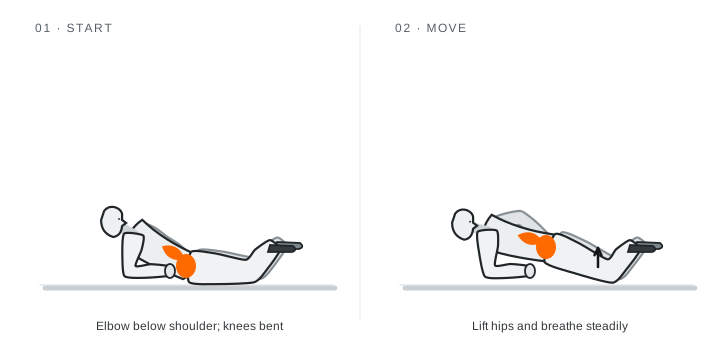
Lie on one side with knees bent and elbow under your shoulder. Lift hips so shoulders, hips and knees form a line. Breathe steadily and hold within control. Lower and repeat on the other side.
Avoid: Shoulder collapsing; holding the breath; twisting hips forward.
Start easier: Shorter holds with hips raised only slightly.
Progress: Progress to a straight-leg side plank with feet staggered.
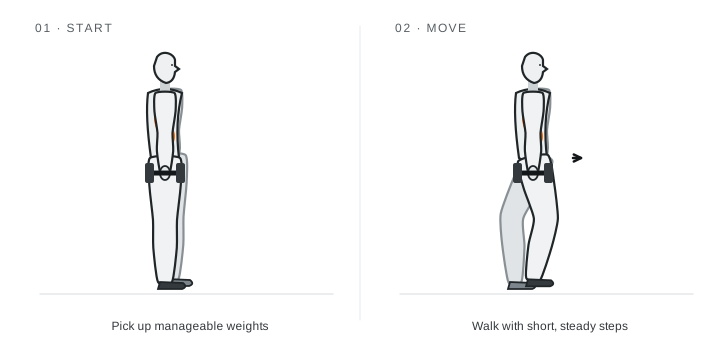
Pick up manageable weights with a controlled hinge. Stand tall, keep arms long and walk with short steady steps. Turn carefully, then set the weights down under control. Use a light load and a clear level path.
Avoid: Leaning; rushing turns; carrying until grip suddenly fails.
Start easier: Shorter walks with lighter weights or one supported standing hold.
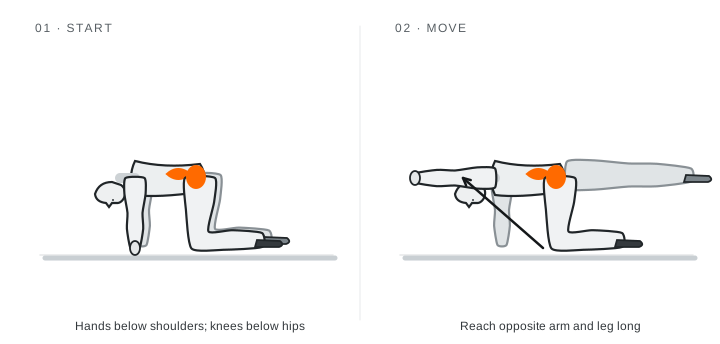
Start on hands and knees. Brace lightly and reach one leg back and the opposite arm forward without rotating your pelvis. Pause, return and change sides. Keep the reach small enough to stay steady.
Avoid: Arching the back; raising the leg too high; rotating hips.
Start easier: Move one limb at a time or do a standing wall-supported version.
Progress: Add a longer controlled pause before increasing reach.
Before you practice: technique & safety
Use the cue. Respect your range.
Use a controlled lowering phase and a smooth lift through a comfortable range. Reps in reserve means how many more repetitions you could do with the same sound technique. It is an estimate, not a test: stop earlier when unsure. Listed sets are work sets. For unilateral exercises, complete both sides; each listed set includes both sides. Rest after both sides, or between sides if needed. Choose one substitute for a movement, not an additional exercise. Similar patterns do not have identical loading: start the substitute light.
For adults 18+. These are general exercise plans, not individual medical or rehabilitation advice. If you have an injury, chronic condition, are pregnant/postpartum, or are unsure what activity is suitable, ask a qualified professional first. Stop for sharp pain, dizziness, unusual breathlessness or chest discomfort; seek urgent care for severe or persistent symptoms. Use stable equipment, inspect bands and anchors, and learn unfamiliar lifts with qualified coaching. Breathe through repetitions and avoid prolonged breath-holding.
Written guidance cannot assess your form. Get qualified coaching for unfamiliar lifts, especially barbell work. Lifestyle images on these pages are not exercise demonstrations.
Lifestyle illustrations are AI-generated and do not depict Physiforge customers or serve as exercise demonstrations.