Core · Trunk stability
Bird dog
Check the setup, practice a controlled repetition, then use your program’s sets, reps and rest.
Return to My Training →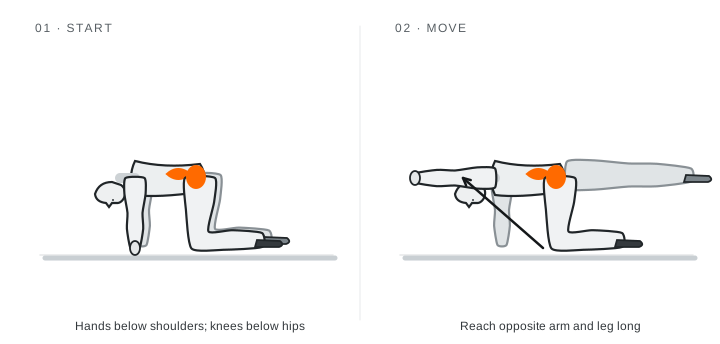
- Equipment
- Mat
- Muscles worked
- Trunk and back stabilizers, glutes
- Movement
- Trunk stability
How to perform
- Start on hands and knees.
- Brace lightly and reach one leg back and the opposite arm forward without rotating your pelvis.
- Pause, return and change sides.
- Keep the reach small enough to stay steady.
Three cues to remember
- Reach long, not high.
- Keep hips facing the floor.
- Return slowly before changing sides.
Common mistakes
- Arching the back.
- Raising the leg too high.
- Rotating hips.
Slow the movement and reduce load or range if your position changes. Stop for pain rather than forcing the repetition.
Make it easier
Move one limb at a time or do a standing wall-supported version.
Progress when ready
Add a longer controlled pause before increasing reach.
Practice with a light load. Diagrams show general positions, not an assessment of your form. Use the written setup and equipment instructions; get qualified coaching for unfamiliar lifts.
Find it in your program
Exercise guides explain the movement. Your training program sets the workload; an alternative replaces a movement rather than adding another one.
Instructional references
Original Physiforge instructions and diagrams use established movement principles. General references are not endorsements or individualized coaching.
ACE: bird dog reference ↗